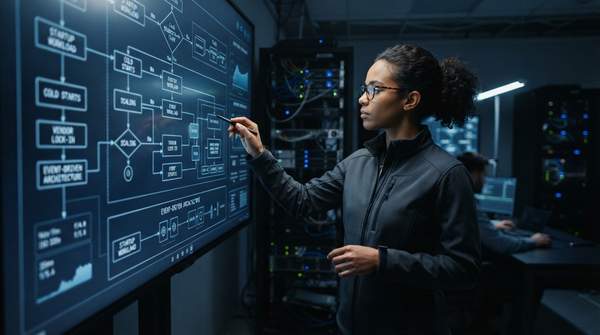
At China's Lufeng nuclear project, a robot dog equipped with sensors now patrols hot-work scenes, ensuring welding operations are carried out properly, a task once solely reliant on human oversight. This deployment marks a significant shift, replacing human inspectors with autonomous systems in critical safety roles. The robot's continuous monitoring capabilities help prevent errors and enhance worker protection, according to chinadailyhk.
Nuclear power construction has historically been characterized by immense complexity and stringent, often manual, safety protocols. However, AI and robotics are now delivering automated oversight with 100 percent accuracy and significantly improved efficiency. This technological integration addresses long-standing challenges in project delivery and risk mitigation.
Based on these early successes, the widespread adoption of AI and robotics is likely to redefine global standards for nuclear safety and project delivery, potentially accelerating the deployment of new nuclear capacity. This approach renders manual oversight obsolete in critical areas, ensuring higher precision and consistent adherence to safety guidelines.
AI Cameras: The New Eyes on Site Safety
AI cameras deployed at Lufeng identify hazards like improper PPE, unauthorized entry, smoking, and potential fires, enabling real-time early warning and rapid response, according to chinadailyhk. These AI-powered surveillance systems surpass human monitoring, detecting issues before incidents occur. This transforms nuclear construction sites from reactive risk environments to predictive, self-monitoring ecosystems, fundamentally altering the paradigm of site safety.
Unlocking Efficiency Through Automated Verification
An AI system at Lufeng improved embedded parts checking efficiency by 75 percent and achieved 100 percent identification accuracy, according to chinadailyhk. Human inspection alone cannot match this level of perfection in safety-critical tasks. This blend of accuracy and efficiency sets a new standard for quality control in nuclear construction. Firms delaying AI and robotics adoption in high-stakes industrial construction risk falling behind in safety and operational efficiency.